If you’re searching for this, you’ve probably got water stains on a ceiling, a scorched kitchen wall, or a musty smell that won’t quit, and you’re trying to figure out who to call before someone takes advantage of a bad situation. The short answer: verify that the company carries IICRC-certified technicians for the specific damage type you have, get a written scope of work before any demolition starts, confirm they’ll document everything for your insurance carrier, and never sign a blank authorization form. Restoration work moves fast, and that speed is exactly what lets sketchy outfits skip steps, inflate invoices, or leave a job half-finished once the insurance check clears.
Why Hiring Under Pressure Goes Wrong
Water damage, fire damage, and mold problems all share one trait: they get worse by the hour, which means homeowners often hire the first company that picks up the phone. That urgency is real, standing water really does invite mold growth within 24 to 48 hours, and smoke residue really does etch into surfaces the longer it sits, but urgency is also what bad actors count on. A crew that shows up, rips out drywall before taking moisture readings, and hands you a six-figure estimate with no line-item detail is a company counting on you being too overwhelmed to ask questions. The fix isn’t to slow down the drying process. It’s to slow down the hiring decision by about ten minutes, which is usually all it takes to separate a legitimate restoration company from one chasing an insurance payout.
Questions to Ask Before You Sign Anything
- Which IICRC certifications do your technicians hold, and for which category? Water restoration (WRT), structural drying (ASD), fire and smoke (FSRT), and mold remediation (AMRT) are distinct disciplines. A company doing fire cleanup should have technicians certified in that specific area, not just water.
- Will you provide a written scope of work before demolition starts? Legitimate companies document moisture levels, affected materials, and planned repairs before anyone swings a hammer.
- Do you bill my insurance directly, or do I pay out of pocket and file for reimbursement? Either model can be legitimate, but you need to know which one you’re agreeing to.
- Can I see your drying logs and moisture readings as the job progresses? If a company can’t produce daily readings, they likely aren’t tracking them, which matters if your claim gets questioned later.
- What happens if you find mold or additional damage once the walls are open? The answer should involve a conversation and a revised scope, not a surprise line item on the final invoice.
What Not to Do
- Don’t sign a blank or open-ended work authorization form. If the scope isn’t specified, the invoice won’t be either.
- Don’t let a contractor start tearing out materials before you’ve seen a moisture map or photographed the damage yourself.
- Don’t assume the biggest estimate means the most thorough work, or that the cheapest estimate means you’re saving money. Compare what’s actually included, not just the total.
- Don’t skip a second opinion on anything involving structural drying or mold remediation, especially if the first company is pushing for an immediate decision.
- Don’t ignore your gut if a company won’t put their certifications, license, or insurance billing process in writing. Reputable companies don’t hesitate on this.
When the Damage Is Bigger Than a Quick Fix
A small, visible leak under a sink is something a lot of homeowners handle themselves. But once water has traveled behind drywall, under flooring, or into a ceiling cavity, moisture meters and thermal imaging are doing work your eyes can’t. The same goes for smoke damage that’s traveled through HVAC ductwork, or a musty smell that persists after you’ve cleaned the visible surface. At that point, you’re not looking for a handyman, you’re looking for a company whose technicians are trained in water restoration (WRT), applied structural drying (ASD), fire and smoke restoration (FSRT), or mold remediation (AMRT), depending on what you’re dealing with. Many homes in Fresno’s older neighborhoods sit on slab foundations with plumbing that’s decades old, which means a leak that looks minor on the surface can mean saturated subfloor or wall cavities that have been wet for longer than anyone realized.
What a Legitimate Recovery Process Looks Like
A properly run job follows a sequence: inspection and moisture or damage assessment first, then a written scope, then mitigation (water extraction, smoke and soot removal, or containment for mold work), then drying and monitoring with documented readings, and finally reconstruction of whatever was removed. Each stage should be visible to you, either through photos, logs, or a walkthrough, and your insurance adjuster should be getting the same documentation you are. If a company skips straight from “we’re here” to “it’s fixed” without ever showing you readings or progress photos, that’s the gap where trust (and sometimes your claim) falls apart.
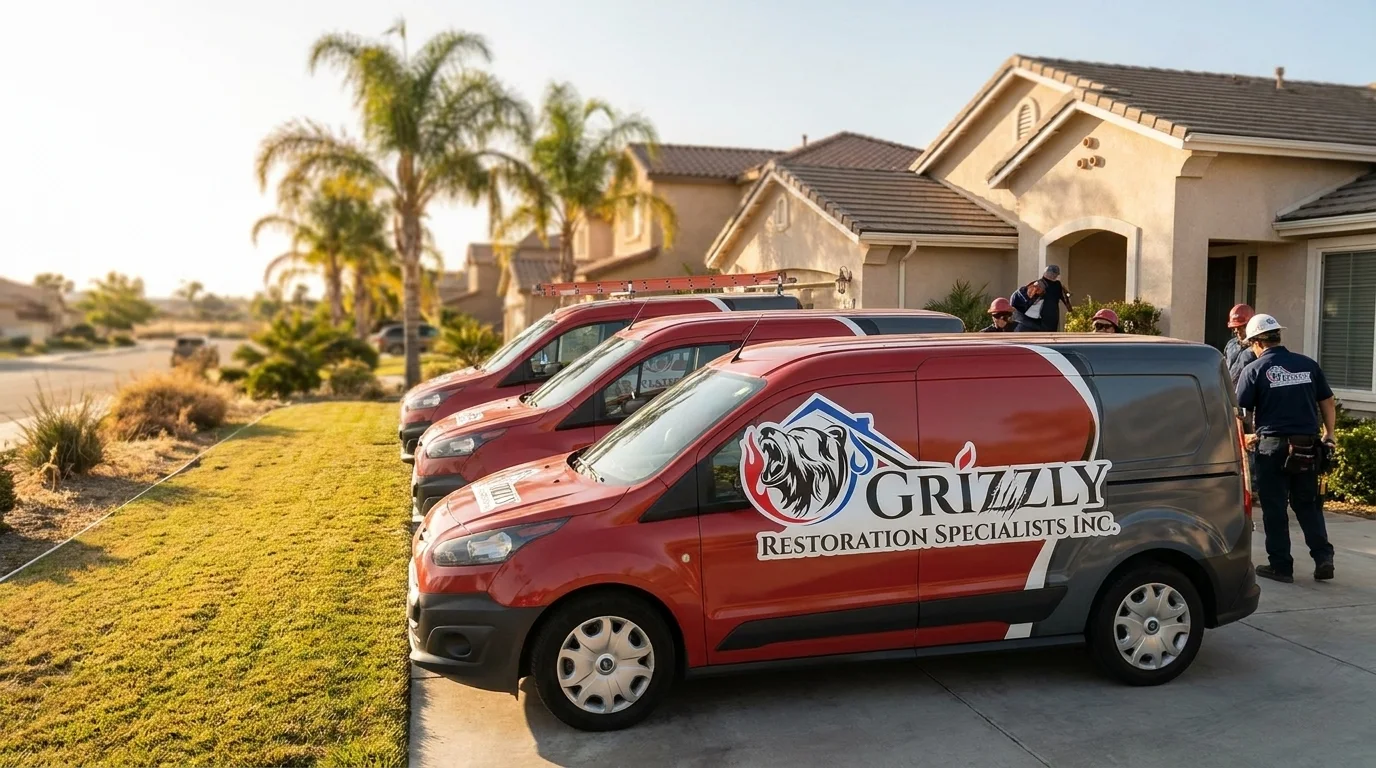
If you’re staring down a wet ceiling, a fire-damaged room, or a smell you can’t place, the fastest way to protect yourself is to get a second set of eyes on it before you commit to a full job. Grizzly Restoration’s technicians document every step for the insurance process and can walk you through what you’re actually looking at, whether that’s water damage, fire damage, or a mold concern, before any demolition starts. Call (559) 417-5369 if you want a straight answer on what you’re dealing with in Fresno.