Pipe burst in your house right now? Shut off the main water valve first, then keep reading; the next ten minutes matter more than almost anything else in the entire repair process.
A burst pipe can dump over a gallon of water a minute into your home depending on the pressure and the size of the break. That’s not a slow drip you can mop up after dinner. It’s water finding its way into subfloor, insulation, electrical boxes, and the cavities behind your walls before you’ve even located a towel. Knowing the order of operations before it happens, not during, is what keeps a burst pipe from turning into a gutted kitchen or a moldy crawlspace.
Why Pipes Burst and What It Looks Like When They Do
In Fresno, the usual culprits are different from what you’d see in a colder climate. Pipes here rarely freeze and split, but older galvanized plumbing common in Tower District and downtown-area homes corrodes from the inside over decades, thinning the pipe wall until it gives way under normal water pressure. Copper pipe joints can fail from age or from a water hammer event (a sudden pressure spike when a valve or appliance shuts off fast). Slab leaks are also common in homes built on a concrete foundation, where a pinhole leak in a supply line under the slab can run for weeks before you notice a warm spot on the floor or an unexplained spike in your water bill.
You’ll usually know something’s wrong before you see standing water: a hissing or knocking sound inside a wall, a damp patch spreading across drywall or ceiling, a musty smell starting in a closet, or your water meter spinning even with every fixture in the house turned off.
Immediate Steps: The First 15 Minutes
- Shut off the main water supply. The main shutoff valve is usually near the water meter, in the garage, or in a utility closet. Turn it clockwise until it stops. If you don’t know where it is, find it today, not during an emergency.
- Kill the power to any affected areas. If water is near an outlet, light fixture, or breaker panel, shut off that circuit at the panel before you do anything else. Water and live electrical components are not a combination to troubleshoot yourself.
- Open a faucet to relieve pressure. This drains residual water sitting in the lines and slows the leak while you work.
- Contain what you can. Towels, buckets, and a wet/dry shop vac buy you time, but don’t spend more than a few minutes here. Containment is a stopgap, not a fix.
- Move what’s valuable. Furniture legs, rugs, boxes, and electronics sitting on the floor should come up and out of the affected room immediately. Wood furniture left sitting in water for even an hour can start to warp or stain.
- Photograph everything before you clean up. Insurance adjusters want to see the damage as it happened, not after you’ve already dried and moved things. Wide shots of the room, then close-ups of the pipe, the wall, and the standing water.
What Not to Do
- Don’t run a space heater or heat lamp to “dry things out faster.” In an enclosed, damp space this can create a bigger hazard than the leak itself.
- Don’t assume a floor that feels dry on the surface means the subfloor is dry. Water travels along joists and under flooring far past where it’s visible, which is exactly how hidden mold growth gets started within 24 to 48 hours of a leak going unnoticed.
- Don’t cut into drywall yourself to “check how bad it is” unless you’re also prepared to deal with what’s behind it. Disturbing wet drywall or insulation without the right containment can spread moisture and, in older homes, disturb materials that need to be handled carefully.
- Don’t wait to see if it dries on its own before calling your insurance company. Most policies require prompt mitigation, and delays can affect what’s covered.
- Don’t run the washing machine, dishwasher, or any other plumbing fixture until the shutoff issue is actually resolved, even if it seems unrelated to the burst pipe.
When to Call a Professional
A licensed plumber needs to physically repair or replace the burst section of pipe before you turn water back on to that line. That part is non-negotiable.
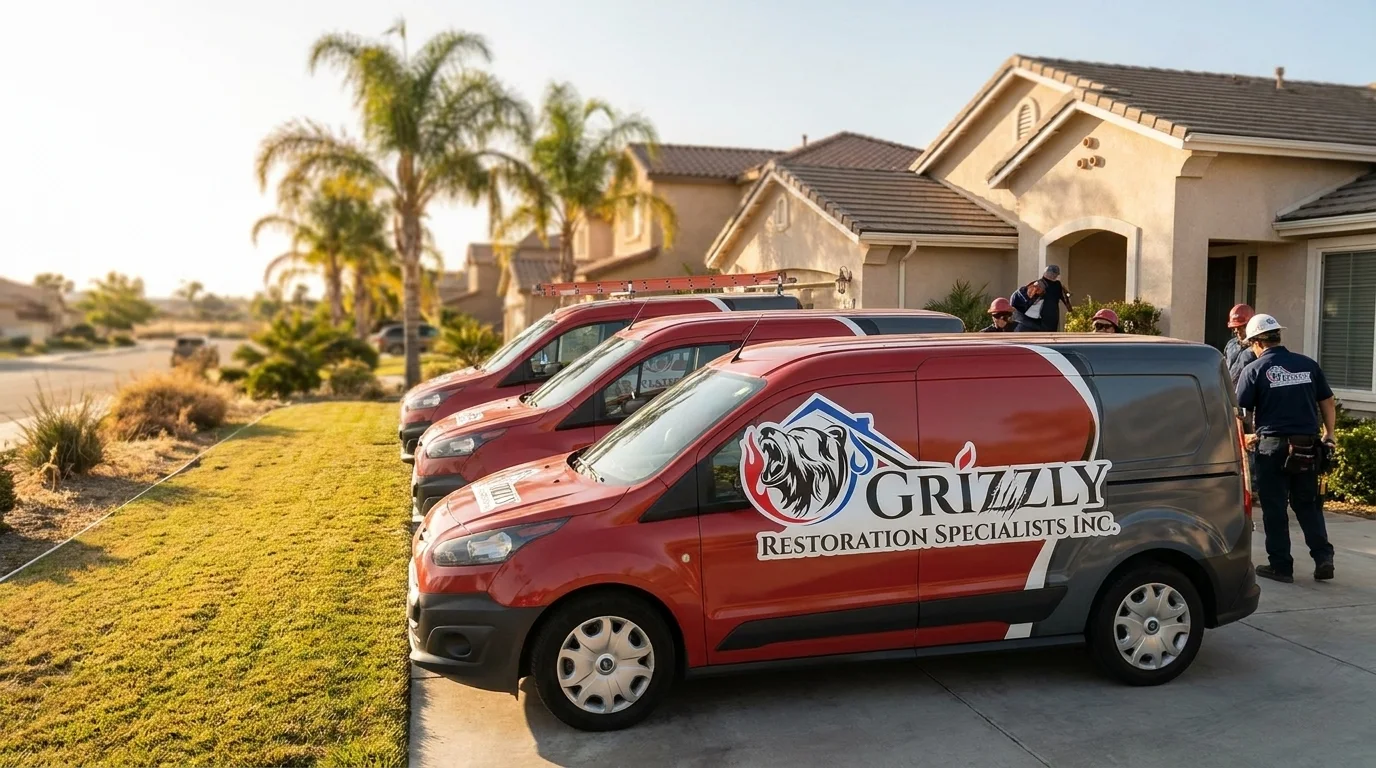
Separately, once the water’s stopped, the damage it already caused keeps spreading until it’s properly dried. This is where a restoration call matters even if the leak itself seemed minor. Water hiding inside wall cavities, under cabinets, or beneath flooring won’t show up as a stain for days, by which time it’s already supported mold growth or softened structural wood. Grizzly Restoration’s technicians, who hold IICRC water and structural drying certifications, use moisture meters and thermal imaging to find water that isn’t visible yet, then set up the air movers and dehumidifiers needed to dry the structure to a safe standard, not just to a surface that looks dry. If the burst pipe was tied to a water heater or appliance supply line, that’s a related cleanup covered under the same kind of response. Call Grizzly Restoration at (559) 417-5369 to get someone assessing the damage.
The Recovery Process After the Water Stops
Once the pipe is repaired and extraction is done, drying is measured, not guessed at. Technicians monitor moisture content in the affected materials daily and keep equipment running until readings return to a dry standard, which is usually a matter of days, not hours, depending on how much material absorbed water and how enclosed the space is. Drywall, baseboards, and flooring that stayed wet too long may need to come out rather than dry in place, since saturated materials can hold onto enough moisture to feed mold growth even after the surface looks fine.
If the water reached a slab or sat for an extended period, expect a conversation about whether cabinetry, flooring, or sections of wall need replacement rather than drying. This is also the point where your insurance adjuster typically gets involved, reviewing the documentation and the drying logs before approving repairs.
A burst pipe is rarely a one-step fix. The plumbing repair solves the source; the water damage response solves everything the water touched on its way through your house. Handling both, in the right order, is what keeps a bad afternoon from becoming a bad month. If you’re standing in water right now, call (559) 417-5369 and get a second set of hands on it.