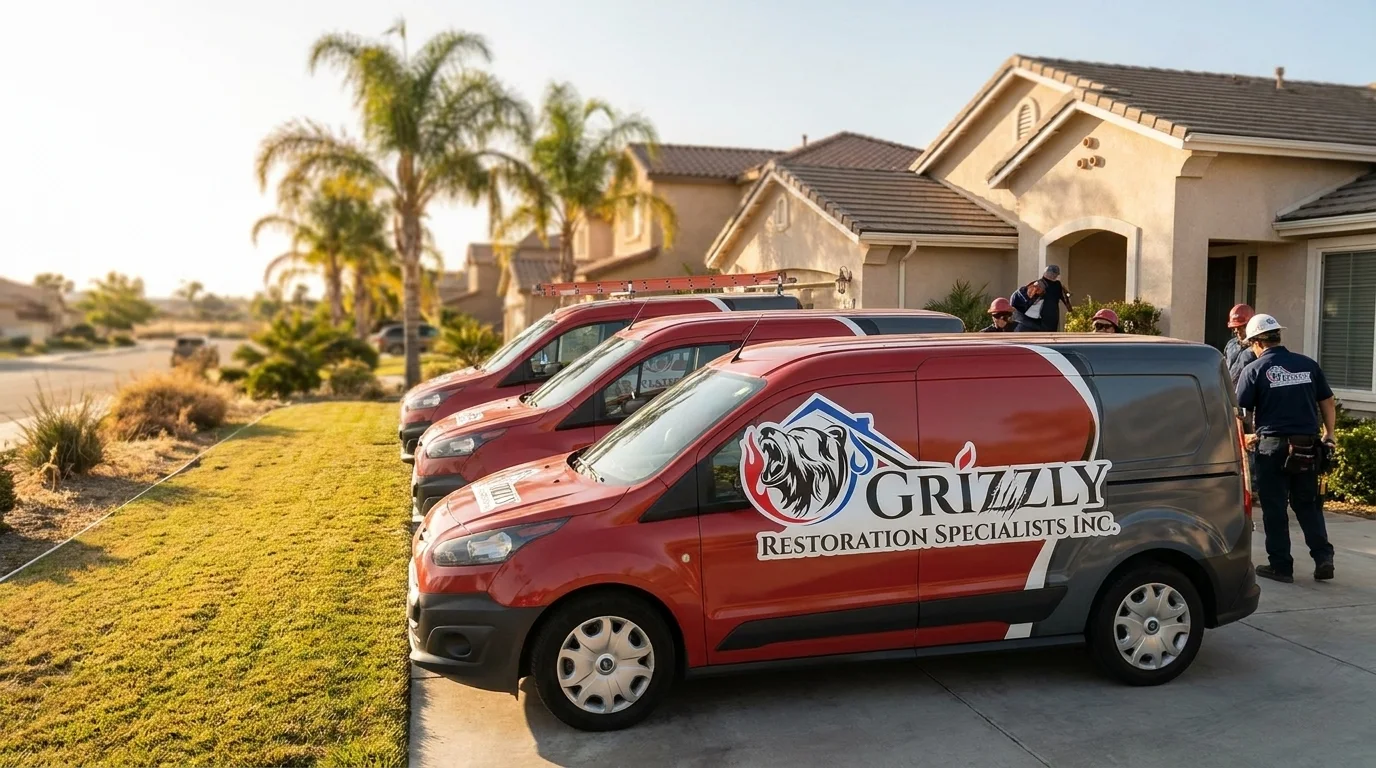
24/7 Emergency Water Removal & Cleanup in Fresno
24/7 emergency water removal & cleanup in Fresno and surrounding areas. IICRC-certified technicians, insurance billing accepted. Call (559) 417-5369.
Water damage emergency in Fresno? A pipe break, overflowing appliance, or roof leak doesn’t wait for business hours, and neither should the response. We answer 24/7 at (559) 417-5369.
Standing water is never just a surface problem. Within hours it wicks into drywall, swells baseboards, and soaks into subfloor and padding you can’t see. By the time carpet feels squishy underfoot, the water has usually already traveled three to four feet past the visible wet line. Emergency water removal and cleanup is the work of getting that water out fast, before it migrates further and before the clock starts favoring mold growth over structural drying.
What Emergency Water Removal & Cleanup actually involves
This service covers the first critical hours after a water loss: pulling standing water, extracting saturated carpet pad and flooring where needed, and setting the drying equipment that keeps the loss from spreading into framing and finish materials. Technicians use submersible pumps and truck-mounted extraction for deep water, handheld extraction wands for carpet and upholstery, and moisture meters to map how far water has traveled under flooring and into wall cavities. The goal in the first visit isn’t a finished job, it’s stopping the damage from getting worse while the structure is assessed and a drying plan is set.
Timeline matters here more than almost any other part of a restoration job. Water sitting on hardwood or laminate for more than a day can cause cupping or delamination that’s no longer reversible with drying alone. Water that’s contacted wallboard for 48 hours or more often means the bottom few inches of drywall have to come out rather than just dry in place.
Our process
- Extraction first. Pumps and extraction units remove standing and trapped water before anything else happens. Every hour water sits is an hour it’s spreading.
- Moisture mapping. Moisture meters and sometimes thermal imaging identify where water has traveled, including inside wall cavities and under flooring, so nothing gets missed and dried out of sequence.
- Material triage. Carpet pad, baseboards, and other materials that can’t realistically dry in place get pulled. Materials that can be saved get flagged for drying rather than demo.
- Equipment placement. Air movers and dehumidifiers get positioned based on the moisture map, not just set up evenly around the room.
- Daily moisture checks. Readings are logged until materials hit dry standard, which is what supports the insurance documentation if a claim is involved.
What separates a good water removal response from a bad one
The most common mistake isn’t equipment, it’s sequencing. Running air movers over carpet that still has standing water underneath just recirculates damp air without pulling the actual moisture out. Another frequent miss is skipping the moisture map and drying only what’s visibly wet, which leaves damp framing or subfloor to feed mold weeks later when nobody’s looking anymore.
Adjusters reviewing a water claim want to see moisture readings taken at the start and tracked through to dry standard, photos of the extraction before equipment placement, and a clear explanation for any material that was removed rather than dried. A response that documents this as it happens moves through a claim faster than one that tries to reconstruct it afterward.
What does Emergency Water Removal & Cleanup cost?
Costs vary with how much water is involved, how far it traveled, and what materials are affected. Every loss gets a written scope before work begins, since two jobs that look similar on the surface, such as a small kitchen leak and a dishwasher overflow, can require very different amounts of extraction and drying. Homeowners insurance typically covers sudden and accidental water losses, like a burst supply line or appliance failure, though coverage depends on the policy and the source of the water.
| Scenario | Typical range |
|---|---|
| Single room, clean water, minor extraction | $400 - $1,500 |
| Multi-room water loss with carpet pad removal | $1,500 - $4,000 |
| Water affecting subfloor and lower wall cavities | $3,000 - $7,500 |
| Whole-floor loss requiring extended drying equipment | $5,000 - $12,000+ |
These are industry-typical figures, not a quote. Your scope will reflect the actual square footage, materials affected, and drying time involved.
Seasonal & regional considerations
Fresno’s dry summers mean a lot of homes see their first real water event come from appliance and supply line failures rather than storms, since plumbing in older Fresno housing stock wasn’t built with today’s water heater and dishwasher loads in mind. Winter brings a different pattern: cooler, wetter months put more strain on aging irrigation lines and roof flashing, and slab-on-grade construction common in the Central Valley means a slow leak under a slab can go unnoticed until flooring starts to lift.
Service area
Grizzly Restoration provides emergency water removal and cleanup throughout Fresno.
If water is actively spreading through your home or business right now, don’t wait for it to find its own stopping point. Call (559) 417-5369 to get extraction started and schedule your moisture assessment.
Frequently Asked Questions
Does homeowners insurance cover emergency water removal and cleanup?
How quickly does standing water need to be removed to prevent further damage?
Can carpet and pad always be saved after a water loss?
What equipment is used for emergency water extraction?
What should I do while waiting for a water removal crew to arrive?
Looking for the best emergency water removal & cleanup company in Fresno?
Grizzly Restoration provides licensed and insured emergency water removal & cleanup in Fresno, CA and the surrounding area, and has served local property owners since 2023. Customers rate us 5.0 out of 5 stars across 4 Google reviews. We answer calls 24/7 — call (559) 417-5369 for immediate help.
Need Emergency Water Removal & Cleanup now?
We respond 24/7 across Fresno and surrounding CA cities.