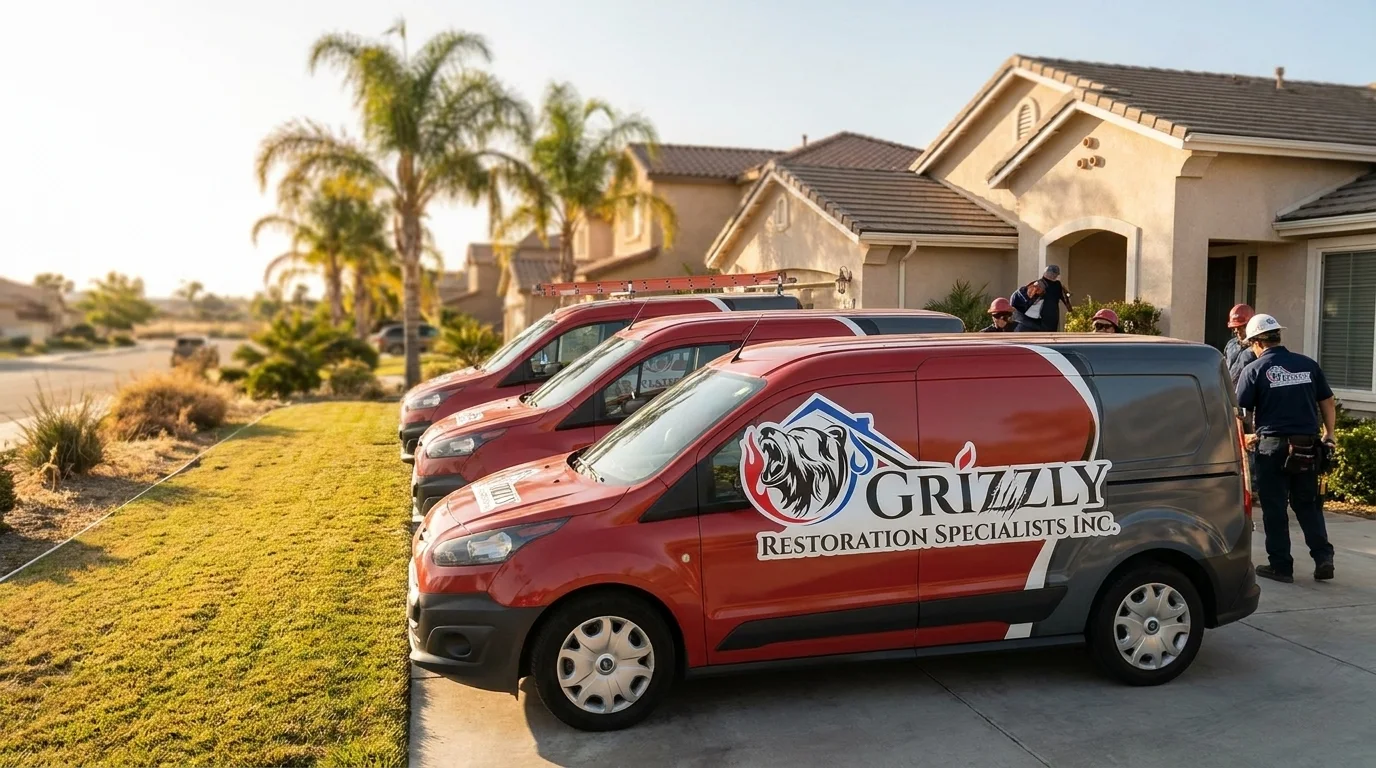
24/7 Emergency Flood Damage Restoration in Fresno
24/7 emergency flood damage restoration in Fresno and surrounding areas. IICRC-certified technicians, insurance billing accepted. Call (559) 417-5369.
Flood damage in Fresno? Call now, we answer 24/7. Floodwater moves fast through a home: it climbs drywall by capillary action, slips under baseboards, and pools in crawlspaces where it goes unnoticed until the smell shows up days later. Whether it’s rising groundwater after a storm, an irrigation canal overflow, or a flash flood pushing water through a slab foundation, the clock starts the moment water touches your floors. Grizzly Restoration’s technicians hold IICRC water and structural drying certifications and respond to get extraction and drying underway before contamination and structural damage set in.
What Flood Damage Restoration actually involves
Flood damage restoration differs from a routine leak because the water is almost always Category 2 or 3, meaning it has picked up soil, runoff, or sewage on its way into your home. That changes the entire approach. Porous materials like carpet pad, drywall below the flood line, and insulation usually can’t be saved and have to be removed rather than dried in place. Hardwood and engineered flooring often cup or buckle within 24 to 48 hours of sitting in standing water. Crews pump out standing water with truck-mount extractors, remove affected building materials to the documented flood line, and set industrial air movers and desiccant dehumidifiers to bring the structure back to a normal moisture range, with moisture readings logged daily so the drying can be verified rather than guessed at.
Our process
- Water categorization and safety check. Before anyone starts extraction, the crew identifies the water source and category, checks for electrical hazards, and flags any structural concerns like saturated subfloor or sagging ceilings.
- Extraction and demolition to the flood line. Standing water is pumped and extracted first, then contaminated drywall, baseboard, and flooring are removed up to the height the water actually reached, not an arbitrary cut line.
- Cleaning and antimicrobial application. Framing, subfloor, and any salvageable materials are cleaned and treated to address the contamination that came in with the floodwater.
- Structural drying and monitoring. Air movers, dehumidifiers, and sometimes injection drying systems run until moisture meters confirm the studs, subfloor, and remaining materials are back to a dry standard, typically checked every day or two.
- Reconstruction coordination. Once the structure is dry and documented, our general contracting team can rebuild drywall, flooring, and trim so you’re not managing separate crews for cleanup and repair.
What separates a good flood response from a bad one
The most common mistake is drying over contaminated materials instead of removing them, usually to save time or avoid demolition. That traps bacteria and organic matter inside wall cavities, which is exactly what leads to odor and mold complaints weeks later. Another frequent miss is skipping moisture readings in framing and subfloor, relying only on surface-dry carpet or drywall as a sign the job is done. Insurance adjusters look for daily drying logs, photos of the flood line before demolition, and documentation of water category, so a response that skips this paperwork often runs into claim disputes. A thorough crew also checks crawlspaces and the underside of flooring, not just visible rooms, since floodwater travels along the path of least resistance and often pools where no one thinks to look.
What does Flood Damage Restoration cost?
Costs vary widely depending on how much water intruded, how long it sat, and how much demolition and rebuild is needed. These are typical industry ranges, not a quote, and every loss is different: Grizzly Restoration provides a written scope of work before any work begins so you know what’s included. Homeowners insurance often covers sudden flood-adjacent losses like a burst pipe or storm-driven water intrusion, but standard policies typically exclude rising-water flood events unless you carry a separate flood policy, so it’s worth confirming your coverage before assuming it’s included.
| Scenario | Typical range |
|---|---|
| Single room, shallow water, quick response | $1,500 - $4,000 |
| Multiple rooms, carpet and pad removal | $4,000 - $9,000 |
| Whole-floor flooding with drywall demolition | $8,000 - $18,000 |
| Crawlspace or basement flood with structural drying | $5,000 - $12,000 |
| Flood with contents loss and reconstruction | $15,000 - $35,000+ |
Seasonal & regional considerations
Fresno’s rainy season runs roughly December through March, and older neighborhoods with aging storm drainage can see street flooding back up into low-lying properties during heavy atmospheric river storms. Homes on slab foundations built before modern grading standards are more prone to water intrusion at the foundation line, while properties near irrigation canals can see seasonal overflow risk. Fast-drying conditions in Fresno’s hot, dry summer months can actually work in your favor once extraction is complete, since ambient humidity is usually low enough to speed structural drying.
Service area
Grizzly Restoration responds to flood damage throughout Fresno.
If water has made its way into your home, don’t wait to see how far it spreads. Call (559) 417-5369 to schedule your flood damage assessment and get extraction and drying started before the damage gets worse.
Frequently Asked Questions
Does homeowners insurance cover flood damage restoration?
How do you decide what gets torn out versus dried in place after a flood?
How long does structural drying take after a flood?
What should I do with furniture and belongings before you arrive?
Can mold start growing before you finish the flood cleanup?
Looking for the best flood damage restoration company in Fresno?
Grizzly Restoration provides licensed and insured flood damage restoration in Fresno, CA and the surrounding area, and has served local property owners since 2023. Customers rate us 5.0 out of 5 stars across 4 Google reviews. We answer calls 24/7 — call (559) 417-5369 for immediate help.
Need Flood Damage Restoration now?
We respond 24/7 across Fresno and surrounding CA cities.