A house fire doesn’t end when the flames go out. What’s left behind, soot coating every surface, smoke odor pushed deep into drywall and insulation, and often standing water from the hoses that put the fire out, is its own separate problem. The fire damage restoration process generally moves through four stages: assessing the damage and securing the structure, removing water and debris, cleaning and deodorizing everything that can be saved, and repairing or rebuilding what can’t. Depending on the severity, that can take anywhere from a few days for a contained kitchen fire to several weeks for a fire that reached the attic or multiple rooms.
What a Fire Actually Leaves Behind
Even a small fire creates damage well outside the burn area. Smoke rises and spreads through HVAC ducts, carrying soot particles into rooms the fire never touched. Protein residue from a kitchen fire leaves a greasy, almost invisible film that smells worse than it looks. Synthetic materials like carpet padding and vinyl flooring release an acrid smoke that clings to fabric and drywall differently than wood smoke does, which matters because the cleaning approach isn’t the same for both.
Then there’s the water. Fire crews use a lot of it, and in Fresno’s older homes, the ones built in the 1950s and 60s with plaster walls and minimal attic ventilation, that water doesn’t dry out on its own. It sits in wall cavities and under flooring, which is why fire restoration and water damage mitigation often happen side by side rather than one after the other.
Immediate Steps Before Help Arrives
Once the fire department clears the structure as safe to re-enter, there are a few things worth doing right away:
- Ventilate if it’s safe to do so. Open windows to start pushing out smoke odor, but only if the fire marshal has confirmed the structure is stable.
- Photograph everything before touching it. Insurance adjusters rely heavily on early photos, especially of items that may need to be discarded quickly, like perishable food or soaked upholstery.
- Shut off utilities if instructed. Gas and electrical systems are often compromised even when the damage looks cosmetic.
- Cover broken windows or damaged roof sections. A board-up or tarp keeps weather and animals out while the rest of the process gets organized.
- Start a contents list. Room by room, rough estimates are fine at this stage. This becomes the backbone of the insurance claim.
What Not to Do
A few instincts after a fire actually make the damage worse:
- Don’t wipe down soot with a wet cloth or sponge. Dry soot turns into a greasy, hard-to-remove paste the moment it meets water, especially on painted walls and ceilings.
- Don’t run the HVAC system. If the ductwork has soot in it, turning the system on recirculates smoke odor through the entire house.
- Don’t throw away damaged items before they’re documented. Even items headed for the dumpster should be photographed first for the claim.
- Don’t assume a room with no visible flame damage is fine. Smoke odor and fine soot travel further than most people expect, and a room that looks untouched can still need cleaning.
- Don’t try to use ozone generators or scented sprays to mask the smell. These cover the odor temporarily without addressing the soot particles causing it, and the smell typically returns within days.
When to Call a Professional
Minor, contained incidents, a scorched pot on the stove with no spread beyond the immediate area, are sometimes manageable with a deep clean and some fresh paint. Anything beyond that benefits from a professional assessment, particularly when:
- Smoke has traveled into rooms beyond the fire’s origin
- The fire department used significant water to extinguish the fire
- The home has synthetic flooring, carpet, or upholstery that absorbed smoke
- There’s any damage to the attic, roof structure, or electrical system
- The smell persists after airing out the house for more than a day or two
Fresno’s dry summers also mean smoke from nearby wildfires can settle into homes even without a structure fire on the property, leaving the same kind of residue on surfaces and in HVAC systems. The cleaning approach is similar, but the smoke itself didn’t originate inside the home, which is worth mentioning to a restoration technician so they know what they’re dealing with.
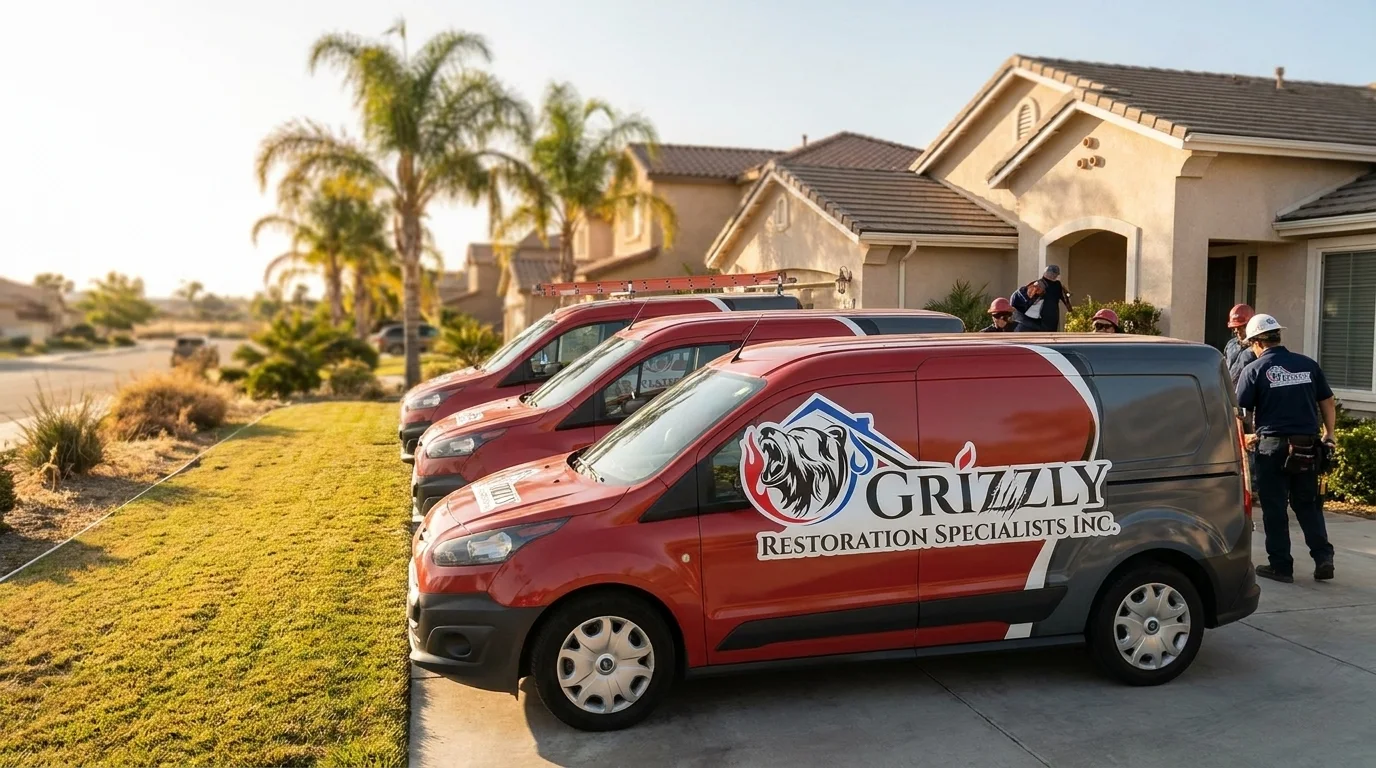
Grizzly Restoration’s technicians hold IICRC FSRT and OCT certifications, which cover structural fire and smoke restoration and odor control specifically. That matters because soot removal and odor neutralization require different techniques depending on what burned and what the smoke traveled through.
The Longer Recovery Process
Once a professional is involved, the work usually follows this order:
- Assessment and documentation. A technician walks the property, identifies the extent of smoke travel, and documents everything for the insurance claim.
- Water extraction and drying, if suppression water is present. This runs in parallel with soot removal since leaving water in place invites a second problem.
- Content cleaning. Salvageable items, furniture, textiles, electronics, get moved offsite for specialized cleaning rather than attempting it in a smoke-filled house.
- Structural cleaning. Walls, ceilings, and hard surfaces get cleaned with techniques matched to the type of soot: dry sponging for certain residues, wet cleaning for others.
- Odor treatment. This is often the step people underestimate. Visible soot can be gone while odor molecules remain trapped in porous materials, which is why deodorization is treated as its own phase rather than an afterthought to cleaning.
- Repairs and reconstruction. Drywall, flooring, or structural elements that didn’t survive get rebuilt as the final stage.
The timeline depends heavily on how far the smoke traveled and whether structural repairs are needed, but most homeowners can expect the mitigation phase (steps 1 through 5) to take anywhere from several days to two weeks, with reconstruction adding more time if framing or roofing was affected.
Moving Forward
A fire is disorienting enough without trying to figure out the cleanup sequence on your own. If you’re dealing with fire or smoke damage in a Fresno home, Grizzly Restoration can walk the property, explain what’s salvageable, and lay out next steps before any work begins. Call (559) 417-5369 to talk through what you’re seeing.