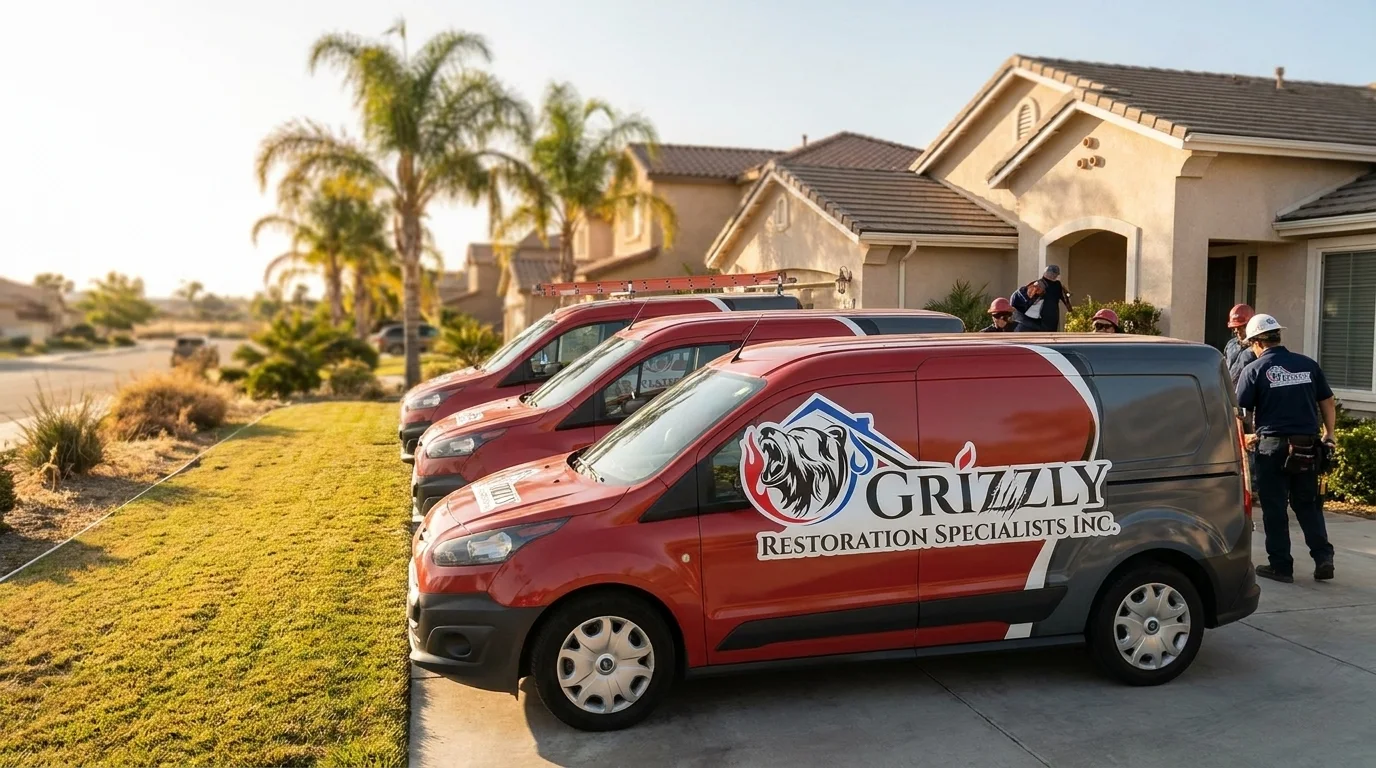
Large Loss and Catastrophic Response in Fresno
Large loss and catastrophic response in Fresno and surrounding areas. IICRC-certified technicians, insurance billing accepted. Call (559) 417-5369.
Large commercial losses don’t look like a flooded bathroom. A burst main under a multi-tenant building, a sprinkler head that fails overnight in a warehouse, or storm water pushing through a loading dock can put tens of thousands of square feet underwater before anyone on site even knows where the shutoff valve is. These losses move fast, involve multiple stakeholders, and punish anyone who treats them like a residential water call scaled up. Grizzly Restoration mobilizes crews, equipment, and a documented scope for property managers, owners, and large loss adjusters who need a response that matches the size of the problem.
What Large Loss and Catastrophic Response actually involves
In the restoration industry, a loss is generally considered “large” once it spans multiple structures or units, involves extensive square footage, or is likely to run into six figures once contents, drying, and reconstruction are totaled. That changes how the work gets staffed. Instead of one truck and two technicians, a catastrophic response means several crews working different zones at once, industrial-grade extraction and desiccant dehumidification running in parallel across the building, and a project lead whose job is coordinating trades, documentation, and the carrier’s large loss adjuster so nothing falls through the cracks. Timelines vary with square footage and the number of affected units, but structural drying on a property this size is measured in zones and daily moisture logs, not a single hygrometer reading.
Our process
- Rapid mobilization and equipment staging. Multiple crews and extraction units deploy together, with desiccant dehumidifiers and air movers sized to the actual cubic footage affected, not guessed at.
- Site stabilization. Board-up and tarping secure openings, compromised walls, or damaged roofing so the building stays weathertight and secure while mitigation work continues.
- Zone-based extraction and structural drying. Technicians holding IICRC WRT and ASD training map the building into drying zones, extract standing water, and log moisture readings by zone so progress is verifiable, not anecdotal.
- Contents triage and storage. Salvageable contents are inventoried, packed out, and moved to climate-controlled storage while non-salvageable items are documented for the claim before disposal.
- Reconstruction scope and permitting. Once the structure is dry, our general contracting team builds a written scope of work, pulls permits, and coordinates licensed subcontractors for any asbestos or lead abatement needed in older building assemblies before framing and finishes move forward.
What separates a good large loss response from a bad one
The failure point on most large losses isn’t the extraction, it’s the documentation and the pace of drying equipment relative to the square footage. Under-resourced jobs leave dehumidifiers running too long on too few units, which stretches a two-week dry-out into a month and inflates the claim. Adjusters on large losses are looking for daily moisture logs by zone, photos before demolition, and a clear chain of custody on contents, not a verbal summary at the end. Projects also go sideways when nobody flags older building materials early: a warehouse or commercial building built before the 1980s may have asbestos-containing materials in flooring, insulation, or ceiling tile, and disturbing that without a licensed abatement subcontractor on the permit creates a liability problem that outlasts the water damage itself. A disciplined response treats the moisture map, the contents inventory, and the hazardous materials assessment as part of the same job, not afterthoughts.
What does Large Loss and Catastrophic Response cost?
Costs on a catastrophic loss scale with square footage, number of affected units, contents volume, and whether reconstruction follows mitigation. Every property is different, which is why Grizzly Restoration provides a written scope of work before any demolition, drying equipment, or reconstruction begins. Most of this work is covered under commercial property or habitational insurance policies, though coverage for business interruption, contents replacement value, and code-upgrade reconstruction varies by policy and is worth reviewing with your adjuster early.
| Scenario | Typical range |
|---|---|
| Single-tenant retail space, Category 1 water, under 5,000 sq ft | $40,000 - $90,000 |
| Multi-unit apartment building, burst main affecting several units | $150,000 - $400,000 |
| Warehouse or industrial flood with contents loss | $250,000 - $600,000+ |
| Office building requiring board-up, mitigation, and reconstruction | $100,000 - $300,000 |
| Large loss with abatement subcontracted for older construction | Varies, added to mitigation and reconstruction scope |
Seasonal & regional considerations
Fresno’s rainy season runs roughly November through March, and that’s when the Central Valley sees the atmospheric river systems capable of overwhelming aging storm drains and flat commercial roofs built decades ago. Older industrial and warehouse stock around Fresno, much of it built before modern plumbing and roofing codes, tends to carry a higher risk of both water intrusion and legacy building materials that need abatement coordination during reconstruction. Outside storm season, large losses here more often come from sprinkler system failures or plumbing breaks in aging multi-tenant buildings, where a single failure point can affect several units before it’s caught.
Service area
Grizzly Restoration responds to large loss and catastrophic events throughout Fresno, working directly with property managers, owners, and the large loss adjusters assigned to commercial and multi-unit claims.
If you’re managing a property with extensive water damage, multiple affected units, or a claim your adjuster has flagged as large loss, call Grizzly Restoration at (559) 417-5369 to get crews and a written scope of work moving before the damage spreads further.
Frequently Asked Questions
Does homeowners or commercial property insurance cover large loss and catastrophic response?
What actually qualifies a claim as a "large loss"?
How many crews get deployed on a catastrophic water event?
Who handles contents during a large loss, and where do they go?
What happens if asbestos or lead is discovered during a large loss cleanup?
Looking for the best large loss and catastrophic response company in Fresno?
Grizzly Restoration provides licensed and insured large loss and catastrophic response in Fresno, CA and the surrounding area, and has served local property owners since 2023. Customers rate us 5.0 out of 5 stars across 4 Google reviews. We answer calls 24/7 — call (559) 417-5369 for immediate help.
Need Large Loss and Catastrophic Response now?
We respond 24/7 across Fresno and surrounding CA cities.